Source: Harvard Business Review
When I decided to pursue a Master in Management after my background in Graphic Arts and Design Practices, it confused people. My family still thinks I am doing a “Masters in Design.” But, here’s what I am noticing so far.
Exploratory Thinking vs Business School Pace
I always find myself starting with simple questions, why are we doing this, what the purpose is, and who it is for. That’s the designer in me, I can’t seem to turn it off.
But it’s not always easy. I tend to explore a topic from different angles, reading, researching, and connecting ideas from various sources. That kind of lateral thinking takes time, and sometimes the pace of business school feels too fast, too much content, too many deadlines, too little time to think the way I naturally do. I am learning (slowly) that maybe this phase is more about prioritising, managing time, and deciding what deserves depth and what just needs to get done.
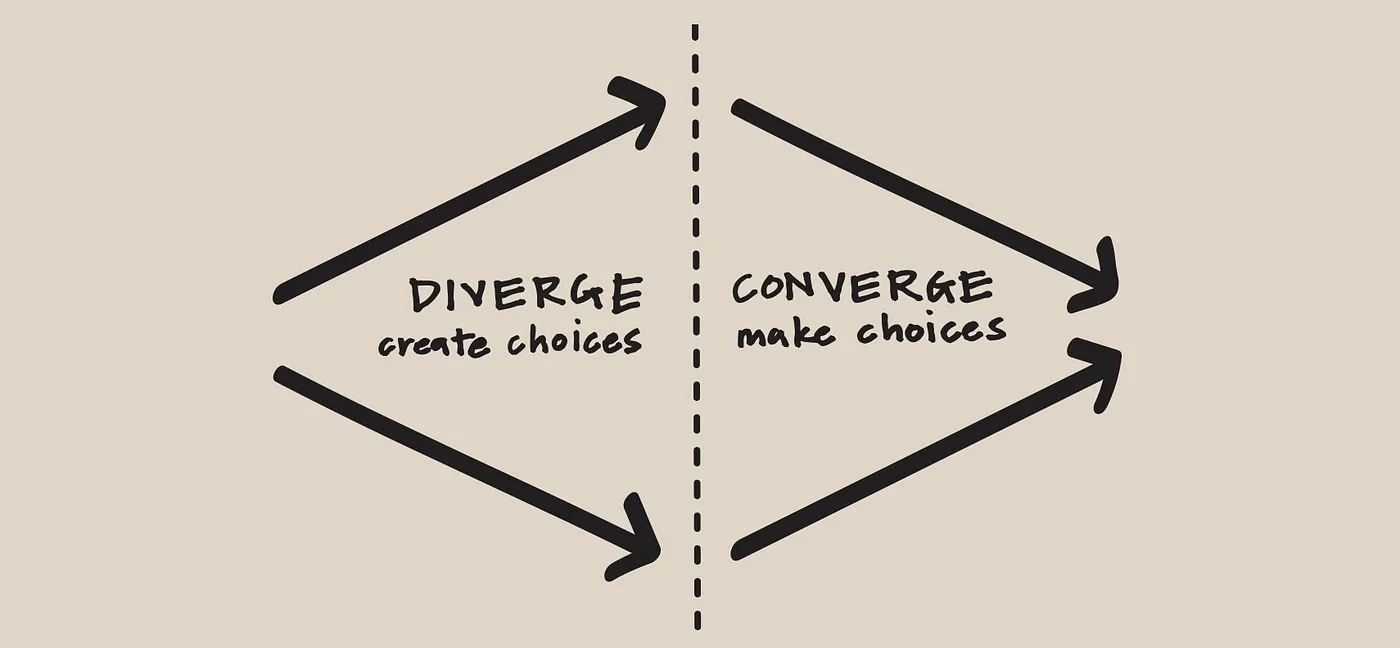
Design Thinking in context by IDEO
Designing for People vs Designing for Organisation
In design, everything is deeply human, understanding people, emotions, experiences and, the details of how they interact with the world. In business school, especially in the core courses, so far the focus has been on data, finances, operations, and market. So now I also have to ask, what’s the financial viability? what is the market share of the existing offerings? what’s the company structure?
The power of knowing design and learning the concepts of business makes me feel very confident about truly understanding a problem statement and proposing strategies that work on both levels.
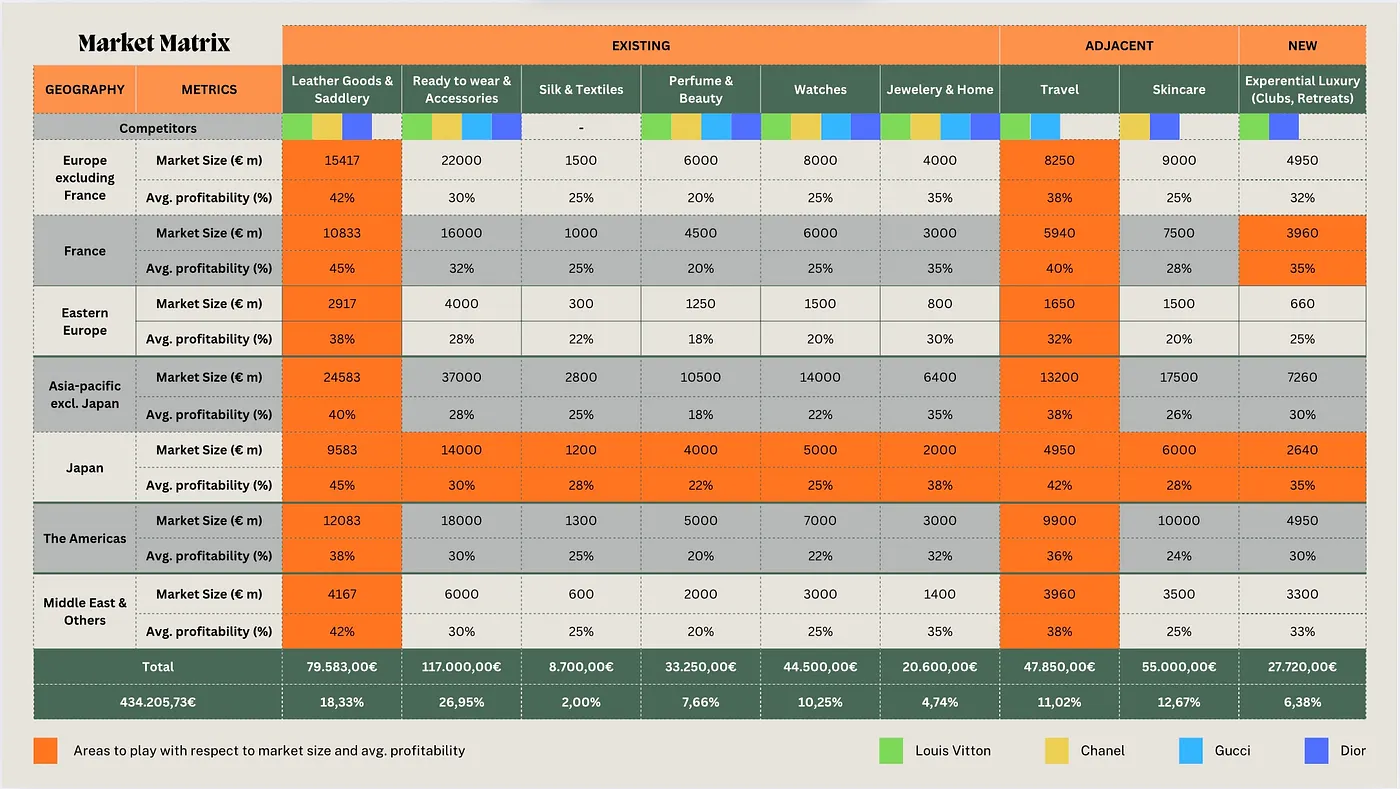
A screenshot of work in progress slide
The people around me
Design school felt like a community of like-minded people with same, creative language. We approached problems with empathy and user understanding. In business school, for masters, the diversity is much wider. People come from finance, engineering, consulting, science, none from design though and from different nations. The ways of thinking are very different.
During a case discussion on Hermès, I pointed out that counterfeiting in markets like India and China could threaten the brand’s exclusivity. But my group members from Italy saw it differently. They said even if copies flood the market, it wouldn’t harm Hermès’ status in their context because authenticity and heritage carry the weight, not scarcity alone. That fascinated me. In India, if something becomes too common, even if it’s fake, it lowers the perceived status of the original. Same brand, completely different cultural logic. My design background taught me to think about brand perception, but business school is teaching me to see how that perception shifts across different markets and cultures.
Where Business and Design Meet
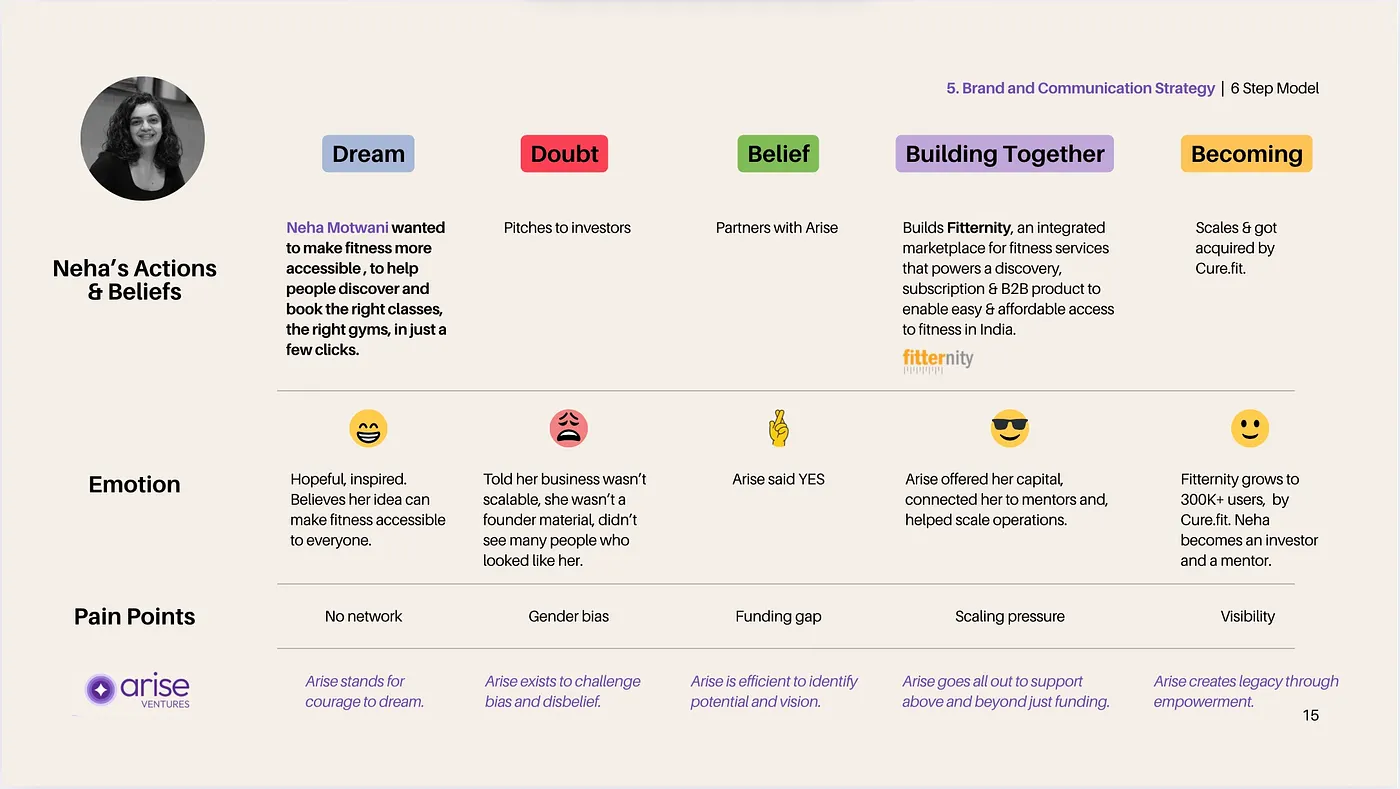
Inspired by a customer journey map, I created this visual for an employer branding assignment at B school to depict a founder’s story and struggles.
Here’s the thing though, they’re not opposites. Having worked with design strategy earlier, I learned how purpose, storytelling, and visual coherence shape perception. Now, I am learning about business strategy, which how decisions are made backed by data, deep market analysis, and financial structures.
I love how design can make business more human, and how business can make design more impactful. Two interdependent forces! I am starting to see how both sides make each other stronger. You can’t just design something beautiful and hope it works. And you can’t just run the numbers and forget there’s a human on the other end. In India, we say ‘Customer bhagwaan hota hai’, the customer is god, but for that value addition to be viable, everything around them needs to make sense too. The finances, the operations, the entire system. It all has to hold.
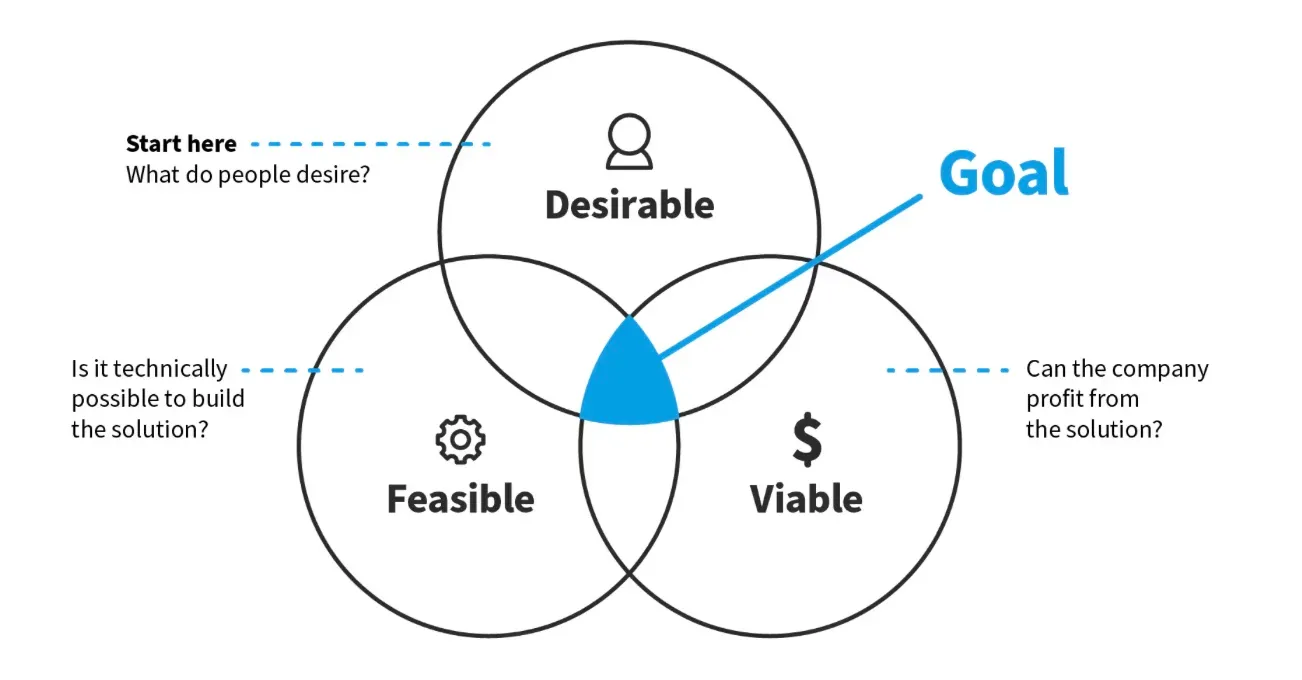
Three lenses of Design Thinking by Interaction Design Foundation
What I have Learned So Far
My definition of design have evolved over the years and I have to come to believe this:
"Design is not just creatively thought and planned things, it is a way of thinking, the ability to think deeply and communicate simply."
And maybe that’s exactly what business needs more of!